Volkswagen's dream team assembles in Chattanooga as the factory goes up behind them. (Volkswagen Group of America photo)
CHATTANOOGA, TENNESSEE--I'm fascinated by the recent trend for auto plants--hardly our greenest manufacturing operations--to go "zero waste," which means that nothing production-related goes to the dump. In effect, it's "nil to landfill," a concept once reserved for fringe activists and New Zealanders (who made zero waste a national rallying cry).
But the under-construction Volkswagen plant in Tennessee I just visited (the company's first in the U.S. for decades) is going to be zero waste, and that milestone has already been achieved by 43% of General Motors' worldwide operation. Wow, if conservative GM can do it, every carmaker can. Subaru says that its sole U.S. plant (in Indiana) is also zero waste, and claims it was the first in the U.S. to achieve that status.
You have to make some allowances here, because nil to landfill doesn't mean that some product doesn't go up smokestacks--GM is incinerating paint sludge, for instance. And read on to see why VW has an edge in that department--its sludge gets made into cement.
There are some really interesting things going on at the VW plant. According to Tobias Schmedding, assistant environmental manager for VW's Chattanooga operations and a member of the company's U.S. site selection team, the plant (on the site of a former Army munitions factory) hopes to source some of its electricity from a landfill four miles away.
The landfill gives off methane, a powerful global warming gas that also doubles as an effective transportation fuel. "Right now they're flaring it off," Schmedding said. But the gas can be captured and burned in an engine to generate electricity that can be brought into the plant via power lines. It's a strategy that is working well for some Vermont farmers today, and if it's good enough for cow power, it's good enough for VW.
The carmaker is building an all-new car code-named New Mid-Sized Sedan (NMS) here, which it fought hard to land against competition in Alabama and Michigan. In the video, Chattanooga Mayor Ron Littlefield and Hamilton County Mayor Claude Ramsey talk about hosting one of the greenest plants in the U.S.:
VW's plant will produce about 30% clean TDI diesel versions, furthering a technology the company has long said is better for the environment on a lifecycle basis than hybrids. But VW has also finally gotten serious about hybrids, too, and recently announced gas-electric versions of the Golf, Touareg, Jetta and Passat. Here are some other ultra-green things about the Chattanooga plant:
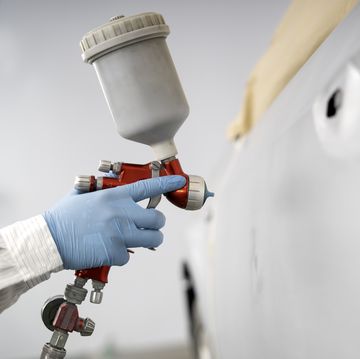
That process avoids the creation of environmentally toxic slurry of water and paint, and it's just one way that VW avoids the landfill. Traditionally, the manufacturing process is 10% or more of a car's lifetime environmental impact, but the Wolfsburg-based company is improving on that equation for its all-new American operation. The VW NMS will start coming out of Chattanooga by early next year.
That Subaru plant is really cool, too, by the way. The 832-acre campus hosts beavers, coyotes and blue herons. In '06, 11,000 tons of steel were recycled, and 1,000 tons of wood from pallets (which protected 31,000 trees).
Follow Jim Motavalli on Twitter
Friend us on Facebook and Follow us on Twitter
|
||||||||||||
![]() |
Enter your city or zip code to get your local temperature and air quality and find local green food and recycling resources near you.
|
![]() |
||||||||||
![]() |
||||||||||||