Tuesday, February 9
ADVERTISEMENT
LIVING GREEN
Driving Directions: Getting There Green

Working Toward a Smart Grid, in America and Fast-Growing China

Policy makers and engineers are ramping up efforts for energy efficiency with new technologies, which will also make way for more electric cars.


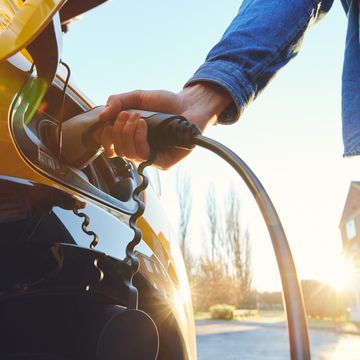
Everybody's talking about the "smart grid" these days but we're not doing much to get it in place. It matters a lot, because a sophisticated, high-tech electric grid that could decide when to charge electric cars (preferably late at night when rates and demand are low) and take power back from automotive batteries would be incredibly efficient. The wind power potential of just three states -- the two Dakotas and Texas -- could provide enough juice for the whole country, but we can't easily move it from one region to another.

high tension power lines

In announcing a stimulus package with $11 billion for smart grids, President Barack Obama said, "The investment we are making today will create a newer, smarter electric grid that will allow for the broader use of alternative energy. We will build on the work that's being done in places like Boulder, Colorado -- a community that is on pace to be the world's first smart-grid city."

Indeed, Xcel Energy announced that Boulder would be wired starting last year at a cost of $100 million. That gives you some sense of how much smart gridding will cost for the whole country, not to mention that the grid is reportedly vulnerable to hackers.

"It's still early stages for the smart grid," says Dr. Steve Hammer, who heads the Urban Energy Program at Columbia University's Center for Energy, Marine Transportation and Public Policy. He's also technical advisor to the Blue Ribbon Commission on Sustainability of the New York Metropolitan Transportation Authority, and a member of New York Mayor Bloomberg's Energy Policy Task Force.

"A lot of people say we're moving toward the smart grid, but they're mostly just talking about smart meters," Dr. Hammer said. "The debate has been pretty confusing so far, since there are many different stakeholders, including the car companies [who want recharging infrastructure], utilities and policy makers. And they're just starting to talk to each other about what a plug-in infrastructure would look like."

When he's not too busy, Dr. Hammer leads the curriculum for the Joint U.S.-China Cooperation on Clean Energy, a nonprofit with offices in San Francisco, Shanghai and Beijing. The China program is a three-year initiative that will expose Chinese mayors from around the country to the "best practices" of the West, with the goal of reducing carbon emissions 10% by 2010. The smart grid is one of the prime concepts we can hope to export.

The scale of things in China is incredible. The country will build 50,000 new skyscrapers (10 Manhattans) in the next 20 years, and what could be more important than making them sustainable? Dr. Hammer says that Shanghai, in 1980, had 112 buildings more than eight stories high. Now it has 13,000 of them. "Shanghai's tall buildings just go on for miles and miles," Dr. Hammer said. "It's like an almost unlimited Manhattan."

dr. steve hammer of Urban Energy Program at Columbia University's Center for Energy, Marine Transportation and Public Policy

A Manhattan that uses a lot of energy. Dr. Hammer has 13 graduate students working on best practices, among them parking solutions in Pasadena, solar maps in San Francisco, green building designs from Battery Park City in Manhattan, and school designs from Heidelberg, Germany. "But we're very aware that what works for New York or Sao Paulo, Brazil might not work for China," Dr. Hammer said, "so we need to be very selective."

Part of the initiative is exposing the Chinese mayors to the concept of the smart grid. "We're hoping they'll start participating in these market approaches and make it more plug-and-play," Dr. Hammer said, "even in advance of the technology itself."

Jim Norrod, who heads Segway, told me that a city the size of Chicago gets built in China every four months. That was an impetus for Project PUMA, the urban transportation system (think an electric, gyroscopically balanced rickshaw, or a pimped wheelchair) that Segway is pursuing with General Motors. And with China very much on its mind.

comment
Print RSS Share Facebook Twitter
Jim Motavalli

Jim Motavalli

Jim Motavalli is a senior writer at E/The Environmental Magazine, a regular contributor to the New York Times and author most recently of Naked in the Woods: Joseph Knowles and the Legacy of Frontier Fakery.
read full bio.
buy the book

buy the book

Forward Drive: The race to build "clean" cars of the future.
related articles on thedailygreen.com

Comments  |  Add a comment

so far..
loading.. please wait

ADVERTISEMENT
about this blog
From clean cars like hybrids and fuel-cells to getting the best gas mileage ... read more.
recent posts most popular
archive

The Real Food Diet
No-VOC Paints
Today: 5 Things Anyone Can Do
Calculate Your Impact
Search for a location:
Enter your city or zip code to get your local temperature and air quality and find local green food and recycling resources near you.
ADVERTISEMENT
ADVERTISEMENT
Hearst Digital Media