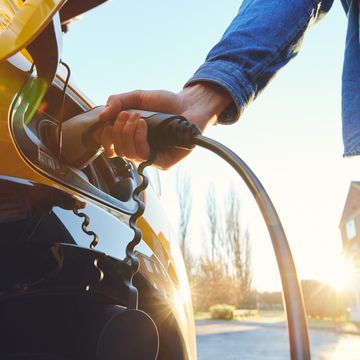
Many of us encounter algae only when the slimy stuff turns our swimming pools green in the summer. But there are hundreds of thousands of species of algae, and some of them are incredibly useful. Gasoline made from algae, anyone?
"Algae can be used to make food, to produce pharmaceuticals, to combat disease and to create plastics," says Rahul Iyer, a founder of the California-based Primafuel company. "And it can also be used to make low-carbon automotive fuels."
Algae can be made into many useful products, including motor fuels. (Primafuel photo)
Primafuel produces algae in what Iyer describes as a "low-input" process. Instead of starting with a fat or sugar that takes energy to produce, it grows algae in shallow, open ponds. The algae are "fed" sunlight, carbon dioxide and small amounts of "green" fertilizer (less than is required for growing crops).
According to Iyer, Primafuel's fertilizers are made from waste biomass, including grass clippings and woody residue. The biomass is converted into nitrogen-bearing ammonia, which is high in nitrogen. Since ammonia is usually produced from natural gas and coal, the process is a big improvement on business as usual. "We think it can help reduce the carbon intensity of all agriculture," Iyer said.
He added that the algae grows quickly, "with 10 to 100 times the productivity of highly genetically modified crops. And it can be produced on totally non-arable land that would not be appropriate for agriculture."
The fact that algae can make the desert bloom helps explain Primafuel's partnership with the Jacob Blaustein Institutes for Desert Research at Israel's Ben-Gurion University. "Algae research was once considered the fringe of the fringe, but finally the world has come to see its incredible potential," says Professor Sammy Boussiba of the Microalgal Biotechnology Laboratory at the Institutes. "This is an exceptional opportunity."
Algae is grown in shallow ponds, fed by sunlight and bio-fertilizers. (Primafuel photo)
Iyer says that synthetic fuels produced from algae will have higher energy density and offer more complete combustion than does today's gasoline and diesel. Initially, he said, it will be blended into conventional fuels, much as ethanol is today. Production costs are still relatively high, but Iyer predicts that cost-effective algae-based biofuels will be available in a few years. In 10 years, he said, it could be a significant consumer product actually replacing gasoline at the pump.
|
||||||||||||
![]() |
Enter your city or zip code to get your local temperature and air quality and find local green food and recycling resources near you.
|
![]() |
||||||||||
![]() |
||||||||||||