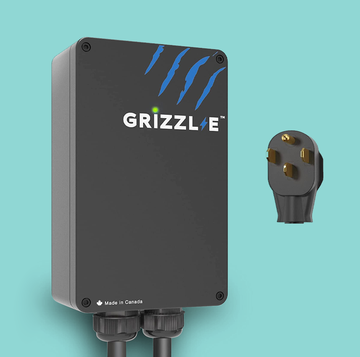
The plug-in hybrid Prius recharging on green energy at the Eco Ideas House. (Jim Motavalli photo)
TOKYO, JAPAN--I admit to loving gadgets, and this is the perfect place to find them, at the huge annual CEATEC show in Tokyo, capital of a gadget-happy culture. And all the better that CEATEC has a green theme this year. 3D TV (some with built-in BluRay players) and new tablet PCs were the big deal this year -- I donned the glasses and saw a lot of soccer balls hit my way. There were eye-popping display screens that must have been 40 feet across. But nearly every manufacturer put the spectacular displays in context of reduced carbon emissions and power-saving tech.
The electric Mitsubishi i-MiEV was here for test rides, and many companies showcased their involvement in plug-in cars, from batteries to power management. Executives from Nissan and Mitsubishi told assembled reporters on press day that electric cars are here to stay, and will soon dominate Japanese roads. The country already has an advanced charging network, including a plethora of 480-volt rapid chargers that are already feeding back usage data.
The fuel cell (display version) installed at the Eco Ideas House. (Jim Motavalli photo)
Panasonic, which makes its own 220- and 480-volt chargers, has a particularly holistic approach to EVs, incorporating them into an entire smart grid concept that was highlighted at the show. The company does a whole lot more than make TVs--it also built the showplace Eco Ideas House at its Tokyo headquarters that achieves zero emission by generating electricity with a rooftop five-kilowatt solar panel and a fuel cell running on liquefied natural gas. A five-kilowatt-hour lithium-ion battery pack stores energy during the day from the solar panel, for use at night.
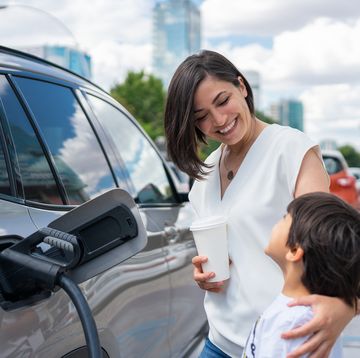
In the garage is a plug-in hybrid Prius, which Toyota is planning to sell in 2012. I'm not sure how Panasonic snared one, but it probably helps that the company makes the Prius' battery pack. I was told that the car represents 30% of household energy use, so the company is trying to take it out of the equation by plugging it into renewable energy.

Hideaki Tsuji of Panasonic, a counselor in the company's planning group, told me that fuel cells are a growth area for the company -- and not just under a car's hood. Panasonic sold 2,000 of the 5,000 home fuel cells installed in Japanese homes as sources of stationary power. The cells provide approximately 60% of household electricity needs, running on household natural gas. These aren't cheap units -- they run $34,000 -- but the Japanese government subsidizes about a third of that. The Prime Minister's residence has had a fuel cell for almost three years.
I'd love to have Panasonic's smart air conditioner, which can scan the room it's in, determine how many people are present and what they're doing (ie, reading needs less cooling than working out) and adjust the temperature accordingly. Also on the market is a refrigerator that learns its family's patterns and goes into eco-mode during low usage times.
CEATEC is a sprawling affair, and a lot of it is frivolous in a nice sort of way. Pioneer's booth showcased its DJ consoles with a blues guitarist playing over what appeared to be weird household sound effects. There was an electric i-MiEV "music car" that I'm sure had a killer stereo.
Strolling the CEATEC floor means being handed brochures in Japanese by smiling hostesses. I don't know what a lot of it was, but I'm sure we'll be seeing it all in stores soon -- with green features that weren't there before.
Follow Jim Motavalli on Twitter
Friend us on Facebook and Follow us on Twitter
|
||||||||||||
![]() |
Enter your city or zip code to get your local temperature and air quality and find local green food and recycling resources near you.
|
![]() |
||||||||||
![]() |
||||||||||||