

The Department of Agriculture has proposed 38 ingredients that could be put in "USDA organic"-labeled foods even though they are not grown organically. Here is the list of ingredients, where they come from, what foods they can be found in, who petitioned for their inclusion on the list and why. For those ingredients that the Organic Consumers Association specifically is trying to have removed from the list, we have also included the group's rationale. The Organic Trade Association supports the list in its entirety, and will make no comments about the validity of individual items on the list.
1. Celery Powder
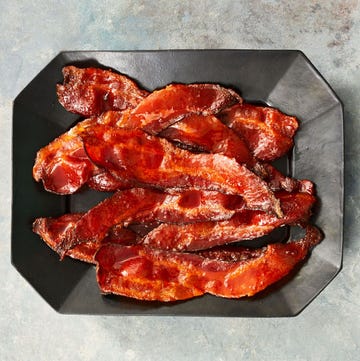
Comes from: Celery that is blanched and the liquid is then concentrated, pasteurized, frozen, and dried with a vacuum dryer. Used in: Celery powder is deemed a natural source of nitrate for meat curing. It's found in hot dogs, bacon, corned beef, pastrami, and salami. Petitioners: Florida Food Products, Inc. (Florida) and Jim Bacus Consulting (Florida). Reason for Petition: Celery powder could be supplied organically, but is not currently available because the organic sausage market isn't large enough to inspire a farmer to produce the product.
2. Natural Sausage Casings
Comes from: Natural casings come from the intestines of hogs, cattle and sheep. Alternatives are syntheticpeelable cellulose or eatable collagen. Cellulose does not "function properly" for skin on sausages like bratwurst, kielbasa and breakfast links, according to the petition. Collagen, commonly used in non-organic sausages, represents a "step away from the 'minimally processed' food paradigm which is at the heart of the organic production philosophy." Used in: Sausages, bratwurst, kielbasa, hot dogs, breakfast links, and pepperoni. Petitioners: Organic Valley-Organic Prairie (Wisconsin), North American Natural Sausage Casings Association (New York), and Applegate Farms (New Jersey). Reason for Petition: "To the best of our knowledge, no manufacturer of natural casings has ever attempted to make natural casings from organic slaughter stock due primarily to the inability to amass enough organic runners for an identity preserved run," the petition reads. "While organic natural casings could easily be produced and would certainly be required for use in products labeled as organic the size of the organic sausage market is a long way from being substantial enough for a natural casing manufacturer to find it attractive enough a market." OCA's Objection: "Many consumers are choosing to pay notably higher prices for organic beef-based meats to avoid conventionally raised beef. By allowing conventional casings on the National List, these consumers will be misled into believing that the meat product they are eating was raised in accordance to the National Organic Standards, when, in fact, the intestinal casing may be from an animal that lived its life on a factory farm in intensive confinement, consuming pesticide-laden foods, and treated with an assortment of antibiotics and drugs. A meat labeled as 'organic' should truly be organic, and the allowance of conventionally produced intestinal casings violates consumer rights."
3. Chia
Comes from: Chia is the plant also known as Salvia Hispanica. The seeds from the plant are edible. Used in: For commercial production, the seeds are ground and used to add fiber and to boost Omega-3 fatty acid content in baked goods and beverages. It's also added to snack foods as well as tortilla chips, flour tortillas, and flatbreads. Petitioner: Salba Nutritional Solutions Inc. (Florida). Reason For Petition: There is no organic product available now anywhere in the world. The company expects it will take five years for it to develop an organic product.
4-17. Colors
Comes From: Annatto Seed Extract, Beet Juice Extract, Beta-Carotene from Carrots, Black Currant Juice, Black/Purple Carrot Juice, Chokecherry Juice, Elderberry Juice, Grape Juice, Grape Skin Extract, Paprika, Red Cabbage Extract, Red Radish Extract, Saffron, and Turmeric. Used In: Used in a range of products from jellies to flavored milks to macaroni and cheese. Petitioners: Colormaker, Inc. (California) and DD Williamson Inc. (Kentucky). Reason for Petition: The markets for organic food colorings are too small to inspire producers. There are no known organic suppliers, either domestically or internationally. OCA's Objection: "Before a food coloring is added to the National List, it should be stipulated that there are no synthetic solvents, preservatives or additives." Beet juice specifically is "available in quantities sufficient enough to serve the organic industry."
18-22. Colors
Comes From: Blueberry, Carrot, Pumpkin, Purple Potato, and Cherry Juices. Petitioner: GNT USA Inc. (New York). Reason for Petition: Explanation deleted by USDA to protect "Confidential Business Information." OCA's Objection: "Before a food coloring is added to the National List, it should be stipulated that there are no synthetic solvents, preservatives or additives."
23. Dillweed Oil
Comes from: Dillweed oil is created from the steam distillation of the dill plant. Used in: It's used as a pickling agent in organic pickling. Petitioner: N/A* Reason for Petition: N/A*24. Fish Oils
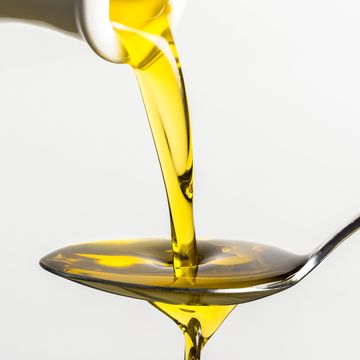
Comes from: Fish oils come from fish that contain high amounts of fat such as salmon, tuna, anchovies, and sardines. The petitioner, Ocean Nutrition Canada, uses primarily Peruvian sardines and anchovies. Used in: Baked goods, baking mixes, cereals, cheese products, chewing gum, condiments, confections, frostings, dairy products, egg products, fats, oils, margarine, fish products, frozen dairy desserts, gelatins, puddings, gravies, sauces, hard candy, jams, jellies, meat products, milk products, nonalcoholic beverages, nut products, pastas, plant protein products, poultry products, processed fruit juices, processed vegetable juices, snack foods, soft candy, soup mixes, sugar substitutes, sweet sauces, toppings, and syrups. It's also used to elevate Omega-3 fatty acid content in other foods as well as in vitamins. Petitioner: Ocean Nutrition Canada (Nova Scotia). Reason for Petition: There are no organic standards for organic fish or fish derivatives, so there is no way to certify a fish or fish product as organic. OCA's Objection: The group alleges that fish oil has not undergone the same review process as other ingredients, and therefore should not be considered until it has undergone the proper process.
25. Fish Gelatin
Comes from: Derived from the skin of farmed or wild-caught fish. The petitioner, Ocean Nutrition Canada, makes fish gelatin from farm-raised tilapia from Peru or Equador on a vegetable or fish meal diet. The skins are processed via the micro-encapsulation of fish oil into fish oil powder. Used in: Used as a stabilizer for food emulsions, gelling and as a thickening agent, fish gelatin is found in a range of products, including yogurt. It's also used as a processing aid to clarify tea and as a fining agent in wine. Petitioner: Ocean Nutrition Canada (Nova Scotia). Reason for Petition: There are no organic standards for organic fish or fish derivatives, so there is no way to certify a fish or fish product as organic. Pork and beef gelatin are available as alternatives, but don''t offer the same exact qualities that fish oils do, according to the petition.
26. Fructo-oligosaccharides
Comes from: Fructo-oligosaccharides are a water-soluble carbohydrate consisting of glucose and fructose that's produced by a natural fermentation process. Used in: Found in baby foods, beverages, acidophilus milk, soft and hard candies as a sweetener, biscuits, cakes, cookies, crackers, frozen dairy desserts, cereals, jams, jellies, flavored and unflavored milks, soups, yogurt, and animal feed. It's also used as a binder and stabilizer in meat and poultry products and serves as a bulking agent by providing prebiotic fiber to foods. Petitioner: GTC Nutrition (Colorado). Reason for Petition: GTC Nutrition, the sole U.S. manufacturer of the trademarked fructo-oligosaaccharides, says that it has petitioned to certify its product as certified organic, wants to continue using it in organic products until that process is complete.
27. Frozen Galangal
Comes from: Also known as Thai Ginger and India Root, galangal is derived from the knobby galanga rhizome or rootstock that's cultivated in Southeast Asia. Used in: Used as a flavoring agent in Southeast Asian- and Indian-style foods. Petitioner: Amy's Kitchen (California). Reason for Petition: Amy's Kitchen requested time to identify and develop a "quality source" of frozen galangal. Dry organic powder galangal is available.
28. Hops
Comes from: Comes from the hops plant in the form of natural hops cones that have been dried and bailed or pressed into pellets. It can also come in the form of hops extract. Used in: Primarily used in beer brewing for the purpose of adding flavor, bitterness, and aroma while acting as a natural preservative and beer clarifying agent. Petitioners: Peak Organic Brewing (Maine) and Anheuser-Busch (Missouri), separately. Reason for Petition: There is not a consistent supply of organic hops. All hops are grown in Idaho, Washington and Oregon, and there are no pest-resistant strains, and the lack of those strains has so far made consistently growing large quantities of organic hops impossible, according to the petitioners. "Because hop growing occurs in such a concentrated area of the United States...it is difficult to attain adequate distance between organic hops from conventional hop crops," according to the Peak Organic petition. "This means that the pests that prey on conventional hops are every present on organic acreage, no matter how diligent the farmer is in their organic practice(s)." OCA's Objection: Some varieties of hops can be found organically, it is misleading to label products like beer organic if a main ingredient is not organic and the inclusion of hops puts small brewers that use organic hops at a disadvantage because they have to compete with large national brewers using cheaper non-organic hops.
|
||||||||||||
![]() |
Enter your city or zip code to get your local temperature and air quality and find local green food and recycling resources near you.
|
![]() |
||||||||||
![]() |
||||||||||||
Comments| Add a comment