Tuesday, February 9
ADVERTISEMENT
NEW GREEN CUISINE
Recipes from the Gluten-Free Girl

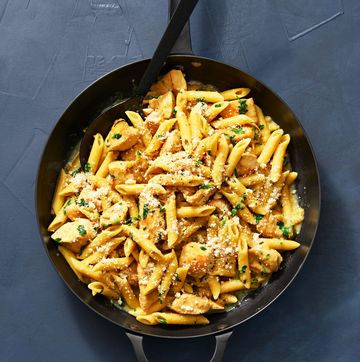
Gluten-Free Pasta for a Busy Week

gluten-free pasta class=
Sometimes food tastes better with less scrutiny. Not expecting anything, I just threw in a pinch of this, a bit of that. (This recipe, therefore, is only the roughest guideline.) When we sat down to eat, the Chef took his first bite, and then said, "Man, sweetie, this is good." And so, here it is.

The meals I throw together without thinking too much are much better for having good ingredients around the house. Mustapha's red pepper salt is a blend of Moroccan poivron rouge, piment fort, and fleur de sel. It's something really special, a clean bite of heat and sweetness, salt that does something far more than what is expected. I'm making all our pasta with a little toss of it from now on.

SERVINGS
Feeds 2

INGREDIENTS
8 ounces gluten-free pasta of your choice (this one is Manicaretti)
3 tablespoons extra-virgin olive oil
1/2 medium white onion, peeled and fine-chopped
1 teaspoon fine chopped fresh rosemary
pinch red pepper salt (or equal parts hot chile pepper and sweet paprika)
pinch nutmeg
pinch pepper
1 28-ounce can diced tomatoes
1 sausage of your choice, already cooked and sliced
2 tablespoons unsalted butter
1/2 cup chicken stock
pinch lemon zest
1/3 cup fresh grated Parmesan

PREPARATION
1. Fill a large pot with water and enough salt to make the water taste like the ocean. A glug of olive oil helps as well. When the water is boiling rapidly, throw in the pasta. Cook it until the texture is just shy of al dente (soft with just a little bite). Drain immediately. Put the hot pasta back in the pot.
2. Bring a large saucepan to medium-high heat. Pour in the olive oil. Toss the onions in the hot oil and stir. Cook the onions until they are soft and translucent, yielding to the touch of your spatula. Put in the rosemary and cook about 1 minute, or until the room begins to smell of rosemary. Pinch in the red pepper salt, the nutmeg, and the pepper. Stir until the onions and rosemary are coated with these seasonings. Pour in the diced tomatoes and allow them to cook for a few minutes, or until the liquid has reduced and almost evaporated.
3. Put 1/2 of the butter in the tomato sauce and swirl until it is all melted. Toss in the sliced sausage and cook until it is evenly heated. Pour in the chicken stock and allow it to bubble and combine with all the other ingredients. When the sauce has reached the thickness you desire, reduce the heat to low.

Put the cooked pasta in the sauce. Stir to coat it entirely.

Plate up the pasta and top with the Parmesan.


Spontaneous Pork Ramen

gluten-free pork ramen

As the Chef said after we finished eating, and he couldn't stop exulting: "This is just one of those dishes where you want to eat and eat and eat. You want a little bit of hunger left over at the end of a meal, and you do here, because it's light. But my god, I haven't had anything like this in a long time."

I could eat this at least three times a week.

SERVINGS
Feeds 2

INGREDIENTS
2 cups chicken stock
couple glugs fish sauce
1/2 tablespoon oyster sauce
couple glugs tamari
pinch chile flakes
1 tablespoon rice wine vinegar
3 ounces thin sliced pork
Kosher salt and cracked black pepper
2 tablespoons canola oil
1/2 small onion, fine diced
1 large garlic clove, peeled and thinly sliced
1/2 cup sliced mushrooms, sliced and then julienned
1 baby bok choy, leaves chiffonade, bottom sliced thin
1 tablespoon Thai basil, chiffonade
1/2 package rice sticks
1 tablespoon sliced ginger
1 carrot, peeled and julienned
handful daikon sprouts
1/2 cucumber, peeled and julienned

PREPARATION
1. Heat up the stock in a large saucepan at a medium simmer. Add the fish sauce, oyster sauce, tamari, chile flakes and rice wine vinegar into the stock. Keep it bubbling, at a slow simmer, while you finish the rest of the dish.
2. Season the pork slices with salt and pepper. Bring a large sauté pan to high heat. Get it screaming-ass hot, as the Chef likes to say. Pour in the oil. Put the thin strips of pork in the hot oil. Sear one side of the pork pieces, and then the other. Remove the pork from heat. Drop the pork into the simmering stock.
3. Bring the sauté pan back to medium-high heat. Drop the onions into the leftover oil and goodness from the pork. When the onions have started to soften, put in the mushrooms, garlic and the roots of the bok choy. Cook for 2 minutes, stirring occasionally, until the onion has become soft and translucent. Add the Thai basil. Cook until it releases its fragrance. Spoon all the sautéed vegetables into the stock as well.
4. Bring a large pot of salted water to boil. (The water should taste like the ocean.) When the water is full roiling boil, drop in the rice sticks. Cook about 5 minutes, or until they are soft with a bit of bite left (al dente). Drain the rice sticks. Put them in the fragrant pork and vegetable stock now too.
5. Put the ginger into the stock and bring the liquid to a boil. Taste the broth. Is it what you want? Season with salt and pepper, if necessary, plus any flavorings you feel are missing. Toss in the bok choy leaves and remove the pan from the heat.
6. Divvy up the ramen into bowls. Toss in the julienned carrot. Top with the daikon sprouts and cucumber.


Seared Tofu

gluten-free seared tofu

The Chef hates tofu. It's anathema to him. Or so he says. Because, I just recently found out that he has eaten tofu exactly once. Our friend Daniel, a vegan for decades, seared cubes of tofu to a perfect sizzle, the insides rich and meaty. The Chef looked puzzled at first bite, and then told me, "That's good." From the way he talked about the stuff, I assumed he had eaten plenty of bad tofu, and made his choice. No, that's the only time he's eaten it. And he liked it.
"Why do you hate it, then?"
"It just seems weird."
Hm. I'll convince him, yet.

So the other day, the Chef was gone all afternoon on a catering gig. And I cooked. Tofu.
Little Bean looked confused when I stood in front of the stove. That told me something. Mama needs to cook more often.

I will say, however, that the Chef's lessons and skills have seeped into me. After watching him sear and braise meat, and throw together sauces that leave my toes curled for how good they taste, I guessed at this method of cooking tofu. I loved it. Dark with oyster sauce and rice wine vinegar mingled, soft and warm, this tofu was so satisfying that I could have this every day for lunch (with a side of sauteed spinach).

I'll help the Chef to love it yet.

SERVINGS
Feeds 2

INGREDIENTS
16 ounces extra-firm tofu
3 tablespoons oyster sauce (make sure it's gf -- that's gluten-free)
3 tablespoons fish sauce (again, gf)
3 tablespoons rice wine vinegar
1 nub ginger, freshly grated
2 cloves garlic, peeled and thinly sliced
5 tablespoons dark sesame oil
kosher salt and cracked black pepper

PREPARATION
1. Put the block of tofu on a cutting board, propped up to slope down toward the sink (or, you could just use a plate.) Top it with a sturdy plate. Weigh the plate down with a couple of your favorite textbooks or heavy tomes. Allow the water to seep out of the tofu for at least an hour. Drain off any remaining water. This will keep the tofu firm when cooking, instead of watery.
2. Combine the oyster sauce, fish sauce, rice wine vinegar, ginger, garlic, 3 tablespoons of the sesame oil, and salt and pepper in a large bowl. Stir them up well. (These measurements are only guesses. Use your senses for your own taste.)
3. Cut the tofu into large cubes, about 1 inch each. Toss the cubes of tofu into the marinade. Coat the cubes well and allow the tofu to marinate for about an hour.
4. Preheat the oven to 450 degrees F. Pull out your cast iron skillet or a large sauté pan. Bring it to high heat.
5. Pour in the remaining sesame oil. When the oil runs around the pan and starts to smoke a bit, put the tofu cubes into the hot oil. Be careful. The oil will sizzle. Stand back and creep forward when the danger has passed. Place all the tofu cubes in the skillet. Cook about 4 minutes, or until the bottom of the tofu cubes have browned. Turn the cubes, carefully and brown the other side.
6. Pour any remaining marinade over the top of the tofu. Slide the skillet into the oven and cook for about 5 minutes, or until the tofu is piping hot.

Serve immediately.


Gluten-Free Ruby-Red Rice Salad with Asparagus and Goat Cheese

gluten-free rice salad

Because it’s such a hearty rice, ruby-red jasmine stands up well to strong flavors, and it works well as the base of this salad. Cooking it with star anise, ginger, and garlic gives the rice such a punch that it almost smells meaty when it’s cooking. I could barely stand the wait until the rice cooker beeped

And then you have to cool it. Well, I did anyway. I think this salad is best served cold.

You could mix any play of flavors in here you want. Try asparagus, I love shaving the stalks and plunging the green curlicues into the rice. Goat cheese camembert is its own delicacy.

But do what you want with this salad. You can’t go wrong. And it’s so darned healthy that you could almost call it a Birkenstock salad. (But I don’t recommend putting your shoes in it.)

SERVINGS
Feeds 4

INGREDIENTS
1 star anise
nub of ginger, peeled
2 garlic cloves, peeled
1 tablespoon butter (or non-dairy substitute)
pinch of pepper and kosher salt
1 cup ruby-red jasmine rice
2 cups of water

PREPARATION
1. Put the star anise, ginger, garlic cloves, butter, pepper and salt in your rice cooker (or pan). Add the rice, and then the water. Stir once, then set the cooker on high to do its magic.
2. When the rice has finished cooking, deeply fragrant and enticing, spread it out on a large plate. Pick out the nubs of ginger and garlic, and the star anise. Put the rice in the refrigerator to cool down.
3. After the rice has sufficiently cooled, toss it with your favorite vinaigrette (we like champagne vinaigrette in particular). And then top with the following:
pieces of avocado
goat cheese camembert
chive blossoms and stalks
fresh cilantro, chopped
shaved asparagus stalks

Or, whatever feels right to you. (I’d dig some sunflower seeds here too.)

Enjoy, and know that you are feeding your body. Oh, and this tastes good too.


Gluten-Free Roasted Chicken with Kiwi, Blood Oranges and Ginger

gluten-free roast chicken

And Twitter gave us this meal.

A few days ago, when I was sitting on Twitter instead of finishing an essay, fabulous Deb of Smitten Kitchen wrote that she had three blood oranges left over. What should she do with them? Eager to take a break from sitting, I ran into the kitchen, where the Chef was cooking and Little Bean was bouncing in her chair. Bending down to kiss her head, I asked him, "What would you do with three blood oranges?"

He thought for a moment, and then said, "a sauce with duck stock, creme de cassis, kiwis, and the blood oranges. Serve it with duck breast and wild rice."

I just stared at him. How does he do this?

We didn't have any duck or creme de cassis, but we had the rest. (He gathered his ideas from what he saw spread out on the kitchen table.) And so, we had this dinner that night.

So can you. I recommend it. It's just so good.

The Chef calls for a "dark chicken stock" in this recipe, which is simply a chicken stock in which you roast the bones before you blanch them. Feel free to substitute at will.

SERVINGS
Feeds 4

INGREDIENTS
1 tablespoon sesame oil
1 onion, fine diced
2 teaspoons garlic, thinly sliced
1 small nub lemongrass (about size of your thumb), smashed
1 1/2 cups Italian black rice
4 cups dark chicken stock
4 whole chicken legs, drumstick and thigh combined
salt and pepper
2 tablespoons unsalted butter
6 tablespoons canola oil
1/4 cup rice wine vinegar
2 tablespoons honey
2 cups dark chicken stock
2 cups mixed mushrooms, ideally whatever is at the farmers' market in this moment
1 teaspoon fresh thyme, fine chopped
2 kiwis, peeled and quartered
4 blood oranges, peeled and supremed
zest of 4 blood oranges

PREPARATION
1. Preheat the oven to 500 degrees F. Bring 2 cups of the chicken stock to a boil.
2. Pour the sesame oil into the large saucepan. Put in half the onion, half the garlic, and lemongrass. Stir the vegetables briefly to coat them with the oil, and then cook until the onion and garlic are soft and translucent. Pour in the black rice, followed by the hot chicken stock. Simmer the rice, stirring once in a while, until it is tender, about 20 minutes. If there is any liquid left over, strain it. Set the rice aside on a back burner, covered.
3. Put in 1 tablespoon each of butter and canola. Lay 3 pieces of the soaked bread in the pan. Brown each on one side. Put the slices on a plate, browned side down. Add more oil and butter. Brown the last 3 pieces of bread. Lay those slices, browned side down, on the plate as well.
4. Smear each chicken leg with oil. Season the chicken legs with salt and pepper.
5. Bring a large sauté pan to heat. Pour in 2 tablespoons of the canola oil. When the oil is hot enough to run around the pan, put the chicken legs in the pan and slide it into the oven. After 10 minutes, turn down the temperature of the oven to 425 degrees F. Roast the chicken until the internal temperature of the leg, right at the joint, has reached 185 degrees F, about 25 minutes. You'll also be able to tell by the warm roasty smell emanating from the onion, enticing you over.
5. Remove the chicken from the oven and place the legs on a plate in a warm place, nestled next to the rice.
6. Drain the grease from the chicken pan. Pour in the the rice wine vinegar and honey and cook it on medium-high until the liquid has reduced by 1/2 its volume. Pour the chicken stock into the pan. Allow the stock to reduce. When the sauce begins to thicken, about 10 minutes, swirl in the butter.
7. Bring a large sauté pan to high heat. Pour in the remaining canola oil. Put the mushrooms into the hot oil. Cook them quickly, stirring occasionally, until they have some color and have wilted a little bit under the heat. Put in the remaining onion and garlic. Cook for a few moments until the onion and garlic are soft and translucent, about 5 minutes. Throw in the thyme and cook until the herb starts to release its fragrance, about 1 minute. Season the mushrooms with salt and pepper.
8. Mix the mushrooms and rice together.

To serve, make a mound of the mushroom-filled rice on each plate. Perch a chicken leg on top of the rice. Swirl some of the sauce around the plate. Place the fruit in the sauce. Top with the blood orange zest.

Suggestions: you can also make this dish throughout the different seasons. Use figs and pears. Mangoes. Raisins and prunes. Grapefruit segments. Whatever you imagine might be good.


Gluten-Free French Toast

gluten-free lemon-pecan biscotti
It's hard to go wrong with French toast. Sweet and milky, chewier than pancakes, love with crusts — this breakfast always makes me happy. Last week, with half a loaf of gluten-free bread left, the Chef turned to me and said, "Tomorrow, French toast."

Oh yes.

Our friend Tita taught us a trick to make the French toast puff up even more. When she told it to us, we thought she was crazy. But, as is always true, Tita was right. After you have soaked the bread in the eggy liquid, and browned one side, remove the slices from the pan and soak them again. When the bread returns to the pan, it will puff and swell pleasantly. More room for maple syrup, as far as I am concerned.

SERVINGS
Feeds 2 or 3

INGREDIENTS
5 eggs
1/4 cup milk (soy or rice milk would be fine here)
1 teaspoon vanilla extract
1/2 teaspoon cinnamon
1/4 teaspoon nutmeg
1/4 teaspoon ground ginger
6 slices of gluten-free bread (we used this sandwich bread), at least 1/2 inch thick
4 tablespoons canola oil
4 tablespoons butter

PREPARATION
1. Slice the bread at least 1/2 inch thick. Mix everything from the eggs to ginger together with a whisk. Bring a large sauté pan to medium heat. (Not screaming hot, says the Chef. Just enough to be nicely warm.)
2. Soak the bread in the liquids for 3 to 4 minutes.
3. Put in 1 tablespoon each of butter and canola. Lay 3 pieces of the soaked bread in the pan. Brown each on one side. Put the slices on a plate, browned side down. Add more oil and butter. Brown the last 3 pieces of bread. Lay those slices, browned side down, on the plate as well.
4. Place the first 3 slices of bread in the egg mixture and let them soak for 1 more minute. Lay them down in the pan and brown on one side, and then the other. When they are lovely caramel brown and tempting enough for you to eat, place them on a clean plate. Repeat the process with the last 3 slices of French toast.
5. Slather with butter and maple syrup. And if you want, you can sauté some bananas with butter and brown sugar and put those on top, as we did here.


Gluten-Free Lemon-Pecan Biscotti

gluten-free lemon-pecan biscotti
This delicious recipe is adapted from Baking: From My Home to Yours by Dorie Greenspan.

A few weeks ago, these biscotti, flecked with lemon zest and crunchy from crushed pecans, made our snow days much sweeter. Stuck in the house because of icy roads and other drivers who don't know how to drive in the snow (mostly those), we wrote and played with Little Bean and worked on the book.

And made biscotti.

For breakfast on the second day, the Chef dunked a piece of biscotti in his milky coffee. He smiled at me sweetly. And then he made the sad face when I told him that he had eaten the last slice.

I made another batch.

SERVINGS
Makes 2 dozen

INGREDIENTS
1/2 cup almond flour
1/4 cup sorghum flour
1/4 cup tapioca flour
1/4 cup potato starch
1/4 cup sweet rice flour
2 teaspoons baking powder
1 teaspoon xanthan gum
1/4 teaspoon salt
8 tablespoons (1 stick) unsalted butter, softened
1 cup sugar
2 large eggs
zest of 1 lemon
3/4 cup crushed pecans (I put whole pecans in a bag and smashed them with a rolling pin)

PREPARATION
1. Preheat the oven to 350 degrees F. Place a piece of parchment paper or a Silpat on a baking sheet.
2. Sift each of the flours through a fine-mesh sieve into a large bowl. Sift the almond flour particularly well, pushing the last of it through the sieve with the bottom of a heavy glass. Toss in the baking powder, xanthan gum, and salt. Stir all the ingredients together. Sift the dry ingredients through the sieve again, which will make them one flour.
3. Place the softened butter in your stand mixer, with the paddle attachment. Start the mixer, beating the butter, and then pour in the sugar. Cream them together until they are smooth, about 3 minutes. Plop in the eggs, one at a time, and continue beating, until the mixture is lovely and fluffy. Toss in the lemon zest and mix. Reduce the mixer speed to as low as it goes.
4. Sift the dry ingredients into the creamed butter and sugar, 1/3 cup at a time, allowing the mixer to run in between batches. When you have finished, the dough will be soft and gathering around the paddle attachment.
5. Grab half the dough with your hands and shape it into a long, low log on the baking sheet. Aim for a rough approximation of a log, a little squat and comfortingly uneven. Form a log with the rest of the dough and place it on the baking sheet.
6. Slide the baking sheet into the oven, on the middle rack. Bake the biscotti until the biscotti logs are golden and somewhat firm, but still somewhat soft, about 15 minutes. Take the baking sheet out of the oven and allow the biscotti to cool for 10 minutes. Move them to a cooling rack and turn your back on them for at least 30 minutes.
7. When the biscotti are entirely cool to the touch, move the biscotti logs back to the baking sheet. Take a large serrated knife and make slices on the bias, all down the logs. (We like our biscotti somewhat thick, but you might want yours more narrow. Just be consistent.) Be gentle. This is a delicate operation. Stand the biscotti slices on their squat bottoms, on the baking sheet. Slide the baking sheet back into the oven. Bake the biscotti until they are unequivocally browned and crunchy, about 15 minutes.
Cool them entirely before attempting to eat.

These biscotti are even better the second day than they were on first eating. Make enough that you will have more to eat with coffee on a languorous morning. You can easily double this recipe.

Use this recipe as a template and play with the ingredients to make other biscotti. I'm thinking about cardamom and dried sour cherry biscotti...


Gluten-Free and Dairy-Free Coconut-Banana Cream Pie

banana cream pie
This pie, by accident, became both gluten-free and dairy-free. No one was complaining in the Ahern household. It takes only a few steps to complete — blind baking the pie, concocting the cream, and sautéing the bananas. If it sounds like too much work for one slice of pie, let me reassure you — it's worth it.

The original recipe comes from a battered old cookbook with spiral binding in the Chef's mom's kitchen drawers: Creme de Colorado, put out by the Junior League of Denver. The Chef grew up in Colorado, and that state (both geographical and of mind) is vastly important to all the Aherns. We thought it fitting to bake something from its pages. After all, the Chef's mother said, "I've cooked out of it for years, and only one recipe was a clunker." (Could it have been the granola with wheat germ and soy beans?) I'm realizing that cookbooks like this — PTA collections; Junior Leagues; the best of bake sales — are treasure troves for gluten-free adaptations. After all, every cook turned in her absolute best to be published. And how can you beat their personalities?

SERVINGS
Makes 1 9-inch pie

INGREDIENTS
1 cup sugar
5 tablespoons cornstarch
1/2 teaspoon salt
3 cups coconut milk
4 large egg yolks, beaten
2 teaspoons coconut extract
4 bananas
1/2 cup brown sugar
3 tablespoons butter (if you need this to be dairy free, use non-dairy "buttery sticks")
3 tablespoons dark rum or kahlua
1 gluten-free pie crust

PREPARATION
1. Combine the sugar, cornstarch, and salt into a saucepan on medium heat. Stir in the coconut milk, gradually, stirring all the while. When the custard has come to a boil, let it remain on the heat for 2 minutes, or until it has begun to thicken to pudding consistency. Remove from the heat.
2. Stir 1/4 cup of the custard mixture into the egg yolks, stirring continuously until it is all mixed together. Pour the egg mixture back into the remaining custard. Cook on medium heat for 2 more minutes.
3. Remove the custard from the heat. Add the coconut extract. Stir.
4. Melt 1 tablespoons of the butter in a large skillet. Add 2 of the bananas. Sauté for a few moments. Add the sugar. Keep flipping and sautéing. When the sugar starts to caramelize, add the rum. Reduce the rum. It might flame -- don't panic. Stir the pan by hand. When everything looks caramelized and reduced, add the remaining butter and bananas and stir. When the butter is incorporated with the rum, take the skillet off the heat.
5. Pour the banana mixture into the bottom of the pie crust. Cover with the coconut custard. Refrigerate overnight, ideally.
Serve.


Butternut Squash Soup with Smoked Paprika

This silky, slightly sweet soup with a kick makes any rainy day feel cozy.

Gluten-Free Ginger-Molasses Cupcakes

There's something so cheerful about cupcakes, right? And luckily, it's really not that hard to make gluten-free cupcakes successfully.

Gluten-Free Rolled Sugar Cookies

sugar cookies
I've gone back to the basics –– these cookies are adapted from The Joy of Cooking.

Instead of making a dozen different kinds of cookies this Christmas, I'm only making these. And I'm not sending tins of them to friends, making an epic trip to the post office to show off my baking skills. We're just going to be munching some in the next few weeks, enjoying every bite.

These are only slightly sweet, in anticipation of the thick rich frosting waiting to sugar them up even more. If you want to eat them plain, I'd bump up the sugar even more. They have the soft bite of snow under boots, the flakiness of that snow first falling, and the ephemeral pleasure of the first storm of winter. (Snow is on my mind. The Chef misses it, terribly.)

We made a little simple syrup for the top and dusted them with powdered sugar. But buttercream frosting and the green sprinkles from our childhood would be fabulous too.

SERVINGS
Makes about 15 to 20 cookies, depending on the shapes.

INGREDIENTS
1/2 cup sorghum flour
1/2 cup tapioca flour
1/2 cup potato starch
1/2 cup sweet rice flour
1/2 cup amaranth flour
1 teaspoon xanthan gum
2 teaspoons baking powder
1/2 teaspoon salt
8 tablespoons (1 stick) unsalted butter, at room temperature
1/2 cup sugar
2 eggs
2 teaspoon vanilla extract
pinch fresh nutmeg

PREPARATION
1. Place all the flours in a medium-sized bowl. Whisk them together. Slowly, sift them through a fine-mesh sieve into another bowl. Add the xanthan gum, baking powder, and salt. Whisk together. Set aside.
2. Stir the butter (or let the beater attachment of the stand mixer do it for you). Add the sugar and cream them together until they are just combined. Add the two eggs and vanilla extract and beat for a couple of minutes more. Throw in the pinch of nutmeg and stir one last time.
3. Sift the dry ingredients into the liquids, one cup at a time. When the entire mixture is combined and well integrated, you are done. It should be a thick batter, not entirely stick to the touch, but not as stiff as traditional rolled cookie dough. Wrap in plastic and refrigerate overnight.
4. Take the dough out of the refrigerator and let it come to room temperature. Don't let it reach complete pliability. The dough should still be rather stiff from the refrigeration. Preheat the oven to 375°.
5. Roll out the cookie dough between two pieces of parchment paper (saves on gluten-free flour on the board). This dough doesn't go paper thin, so you'll have cookie with a bite to them. Cut out with your favorite shapes.
6. Bake for 8 to 12 minutes, depending on your oven and how crisp you like them. Let them cool for 10 minutes before eating them. I know. Try.


Gluten-Free Granola Bars

granola bars
Packed with nutrition, sweet with dried fruit, and compact for the hand, power bars and granola bars have taken over the land. However, most of the commercially packaged ones have gluten in them. And other kinds of bars, while mostly good, grow bland after awhile.

So I set out to learn how to make my own. While the Chef held the baby and played with her, I set up in the kitchen: all ingredients arrayed out; saucepan, casserole dish, and big bowl waiting; good music on the player. While he's home, I sometimes take my space and make the kitchen my own again. Half an hour later I was dancing to Bill Frisell and patting down the last of the granola mix into the pan. Life felt good in that moment.

There are so many ways to make granola bars. I was inspired by Heidi Swanson's recipe in Super Natural Cooking and a dozen more I found on the internet. This is really only a template. Find the fruit you like best. Play with cereals and grains. Use honey instead of agave. Just find a way, as I did, to make these. They're sweet and nutritious, crunchy and chewy at the same time, and really quite addictive. And with their density preventing me from eating more than one at a time, they'll be around for a bit, waiting for me in that emergency situation where I have to eat now, but there's no time to eat.

SERVINGS
20

INGREDIENTS
2 cups rolled oats, certified gluten-free
1 cup hazelnuts
1 cup agave nectar syrup
1 cup muscovado brown sugar
2 tablespoons butter
1 teaspoon vanilla extract
1/2 teaspoon sea salt
1/4 cup sunflower seeds
1 cup brown rice cereal
2 cups mixed dried fruit (here I used mangoes, raisins, and cranberries)

PREPARATION
1. Preheat the oven to 325°. Line a small casserole dish with parchment paper. (If you want thick granola bars, use a small casserole dish. For thin ones, choose a larger casserole dish).
2. Slide the oats and hazelnuts onto a baking sheet and into the oven. Let them toast, turning them once in a while, for about ten minutes.
3. While those are toasting, put the agave nectar syrup, brown sugar, butter, vanilla, and sea salt into a saucepan. On medium heat, bring the syrup to a slow boil. Set aside.
4. In a bowl, combine the toasted oats and hazelnuts, the sunflower seeds, brown rice cereal, and dried fruit. Pour the syrup over this concoction and stir it all up, making sure everything is evenly coated.
5. Pat the mixture into the casserole dish, on top of the parchment paper. Smooth the top with a rubber spatula. Put the dish into the oven to bake.
6. Bake for 20 to 30 minutes, depending on how crunchy you want the bars to be. Allow them to cool for at least an hour before cutting them up into bars. (You'll probably have to hack at them a bit. These aren't soft granola bars).


Ooey-Gooey Gluten-Free Chocolate Chip Cookies

Slightly Cakey, Chewy and Moist, Chocolate Arriving in Melted Chunks

Gluten-Free Chocolate Cupcakes

Dark as lava, as moist as the ground in Seattle in November, and rich in chocolate goodness, these cupcakes are addictive. Add some coffee ganache frosting, and you're pretty much in heaven.

Who needs to feel deprived this holiday?


Gluten-Free Buttermilk Biscuits

I remember my mom making biscuits from scratch some evenings. Now, I realize she used Bisquick as the base. What does that matter?

She still put them together with her capable hands, cut through the pillowy dough with an antique cutter given to her by her mother, and pulled the golden warmth from the oven to our oohs and ahhs. I remember standing beside her in the kitchen one day, when I was about seven or eight, and watching her hands make biscuits. They seemed so sure, so reassuring. I wondered if I would ever be that strong.


ADVERTISEMENT
about this blog
Gluten-Free Girl author Shauna James Ahern shares delicious, gluten-free recipes ... read more.
buy the book

buy the book

Gluten Free Girl: How I Found the Food That Loves Me Back...And How You Can Too.
recent posts most popular
archive

The Real Food Diet
Healthy Seasonal Recipes
12 Foods To Eat Organic
5 Ways to Save on Organics
Search for a location:
Enter your city or zip code to get your local temperature and air quality and find local green food and recycling resources near you.
ADVERTISEMENT
ADVERTISEMENT
Hearst Digital Media