tool belt, home improvement resolutions, new years resolutions 2010
tool belt with hammer
The information in this feature refers to home improvements installed in 2010 and claimed on 2010 tax forms. See how tax credits for home improvements have been reduced for 2011.
This is the year. If you've been sitting on home fixes, waiting for the right time, it's 2010. Lucrative federal tax incentives are set to expire at the end of 2010, meaning these projects will never be more affordable. The government will cover 30% of the costs, in most cases, and investments in energy efficiency generally pay for themselves over time, since you'll be paying for less wasted energy year after year. (Except where noted, taxpayers can qualify for no more than $1,500, regardless of the total cost of multiple qualifying projects were performed in 2009 and 2010.)
energy audit, home improvement resolutions, new years resolutions 2010
money bulb
Measure twice, cut once. A professional home energy audit can help you target the most critical fixes first, or do your own energy audit to identify the most cost-effective fixes. Before you do the work, check this database of state incentives, so you're sure to take advantage of the full range of credits, which in some states require energy audits or installation by accredited professionals.
home resolutions, new years resolutions 2010, insulation, tax credits
insulation
One of the most cost-effective home improvements, good insulation can save up to 30% on heating and cooling costs, since you won't be paying for heating or cooling air that slips out through poorly insulated walls, floors and ceilings. If you choose approved insulation (meeting International Energy Conservation Code standards), you can have 30% of the cost, up to $1,500, taken off your 2010 income tax bill. If you have the wherewithal, install the insulation yourself, because the cost of labor does not qualify for the tax credit.
energy efficient windows, tax credits, home improvement resolutions, new years resolutions 2010
replacing an old window
If your home has old windows and doors, you're paying a premium for them as hot air in the winter, and cool air in the summer, escapes to the outdoors. But replacing doors and, especially, windows, is an expensive fix that won't pay itself off in energy savings for years. If you do the work in 2010, though, you can get 30% of the cost reimbursed at tax time, up to $1,500. You just have to choose energy efficient equipment that meets standards. Be aware that the federal government will not reimburse for any of the cost of labor.
home improvement resolutions, new years resolutions 2010, energy star, tax credits
energy star refrigerator
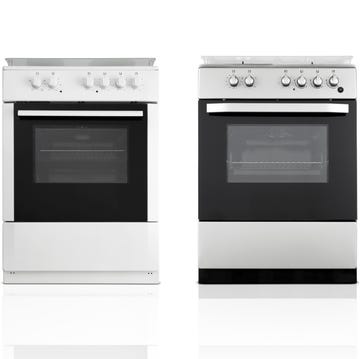
Whether it's a refrigerator, a furnace or an A/C unit, chances are good that 2010 will be the best year to replace an old clunker with a new efficient model. Efficient furnaces, central air conditioners, water heaters and other HVAC standbys qualify for a tax credit equal to 30% of the cost, up to $1,500.
re roof, home improvement resolutions, new years resolutions 2010, tax credits
roof and ladder
Both Energy Star-rated metal roofs with "pigmented coatings" and asphalt roofs with "cooling granules" will cut down on cooling costs in the summer by reflecting more of the sun's heat. It's also a dark horse solution to global warming, since cities absorb so much heat through dark roofing materials. If your roof is ready for a replacement, then go with one of these materials, and the government will reimburse 30% of your material costs, up to $1,500. Sorry, labor not included.
solar hot water, home improvement resolutions, new years resolutions 2010, tax credits
solar hot water
Unlike the energy efficiency projects, home solar tax credits extend beyond 2010, to 2016. So plan now to take advantage of generous tax credits that will pay 30% of the cost of home solar projects, including solar water heaters. Unlike other credits, these credits are not capped at $1,500. Additionally, communities in at least 15 states are beginning to offer so-called PACE loans that are paid off incrementally at tax time by whomever owns the house. The annual cost -- typically less than the energy savings provided by the investment -- is shared by successive owners of the home.
smart meter, home improvement resolutions, new years resolutions 2010
smart meter illustration
A smart meter makes realtime energy usage data available so you can easily cut out waste. Before long, the meters will automatically cut waste by flipping on appliances to run only when the cost of electricity is low. Ask your local utility if it's offering smart meters, and look for government incentives soon. The Obama Administration has set a goal of increasing the use of smart meters five-fold to 40 million American homes by 2015.
|
||||||||||||
![]() |
Enter your city or zip code to get your local temperature and air quality and find local green food and recycling resources near you.
|
![]() |
||||||||||
![]() |
||||||||||||
Connect with Us
:
: More Options

Comments| Add a comment