green roofs, feldman, green building, green house, green home
green roof on feldman house, saint lucia reserve, carmel california
A green roof is an extension of a new or existing roof that involves a high-quality water proofing and root repellant system, a drainage system, filter cloth, a lightweight growing medium and plants. Green roof systems may be modular, with drainage layers, filter cloth, growing media and plants already prepared in movable, interlocking grids, or, each component may be installed separately. Green roof development involves the creation of "contained" green space on top of a human-made structure. This green space could be below, at or above grade, but in all cases the plants are not planted in the "ground."
Pictured: Feldman Residence, Saint Lucia Reserve, Carmel California
green roofs, california academy of sciences, green building
green roof on california academy of sciences building, rana creek living architecture
There is no single type of green roof that works for all buildings, climates and client needs. Green roofs can be categorized as "intensive" or "extensive," depending on the depth of growing medium. Six inches or less growing medium depth is an extensive roof, also characterized by its lower weight, lower plant diversity, cost and maintenance. Intensive green roofs have more than six inches of growing media and tend to have higher plant diversity, higher weight, cost and maintenance.
Pictured: California Academy of Sciences, green roof by Rana Creek Living Architecture
green roofs, dearborn plant, ford, factories, green building
green roof on ford dearborn assembly plant, green factory
One benefit green roofs provide is increased savings on heating and cooling energy costs. Results vary according to size of the building, climate and type of green roof, but when Environment Canada ran a simulation, they found that a typical one-story building with a grass roof and 3.9 inches (10 cm) of growing medium would result in a 25% reduction in summer cooling needs. Field experiments by Karen Liu in Ottawa found that a 6-inch extensive green roof reduced heat gains by 95% and heat losses by 26% compared to a conventional reference roof.
Pictured: Ford Dearborn Assembly Plant in Michigan, green roof by William McDonough + Partners
green roofs, macallen building, landmark studios, swimming pools, green building
green roof and swimming pool on macallen building condominiums boston, landmark studios
Green roofs decrease the cost of meeting greenhouse gas reductions and adapting to climate change by reducing the "urban heat island effect" -- the phenomenon of metropolitan areas being significantly warmer than surrounding rural areas, due to the heat-reflecting nature of concrete and other man-made materials and the release of heat from air-conditioning systems and machinery. The reintroduction of vegetation into cities promotes natural cooling by absorbing, instead of reflecting, the sun's rays, and through evapotranspiration. Traditional black roofs can reach temperatures of 158°F/70°C, and as a result have an enormous effect on building and ground level temperatures. One study concluded that 25% green roof coverage can reduce the urban heat island effect by up to 1.8°F/1°C. Green roofs can also mitigate air pollution levels by trapping particulates and capturing harmful gases.
Pictured: Macallen Building Condominiums in Boston, by Landmark Studios
green roofs, ballard library, green building
green roof ballard library, Seattle Washington – American Hydrotech
Many older cities have combined sanitary and storm sewers, whose treatment capacity can be overwhelmed by heavy precipitation, resulting in pollution of waterways with untreated wastewater. By capturing and temporarily storing stormwater, green roofs can reduce run-off volumes, thereby reducing the occurrence of combined sewer overflow events. By reducing peak flows, green roofs can also reduce the incidence of flooding and damage by erosion.
Pictured: Ballard Library, Seattle Washington, green roof by American Hydrotech
luisa, green roofs, green building
green roof on the luisa, portland, oregon
Green roofs filter stormwater, improving the quality of the runoff. Studies have shown that a conventional roof's runoff contains high concentrations of pollutants from rainwater, roofing materials, and atmospheric deposition. The plants and growing media used in green roofs help decontaminate runoff, loading fewer pollutants into the municipal stormwater system.
Pictured: The Luisa, Portland, Oregon, green roof by Walker Macy Landscape Architects
green roofs, ducks unlimited, green building
green roof on ducks unlimited canada national hq and oak hammock marsh interpretive centre, winnipeg
Some wildlife can be sustained by green roofs, although they are not intended to be replacements for true natural areas. Rather, they can be part of a system to complement green corridors and wildlife habitats within an urban setting. In highly populated areas, green roofs could represent island habitats, or better yet, stepping stones for wildlife movement. Even in densely populated areas, beneficial insects, birds, bees and butterflies can be attracted to green roofs. Native plant selections usually fare better in these instances since they have evolved together with the animals that depend on them for food, shelter and cover.
Green roofs can be specifically designed to mimic endangered habitats, including the prairie grasslands of the Midwest, the rocky alvars of Manitoulin Island or the Great Lakes region. Roof vegetation normally encounters less interference than an equivalent area at ground level, which could be an important factor to creatures wary of human disturbance in urban settings.
Pictured: Ducks Unlimited Canada National HQ and Oak Hammock Marsh Interpretive Centre, Winnipeg, Manitoba
green roofs, green building, evergreen state, colleges
green roof on evergreen state college building
Rooftop agriculture can help mitigate the negative impacts of urban sprawl, ensure heightened food security, and engage communities in the food production process. Given that at-grade land in urban centers is at a premium for development, roofs are a logical location for urban agriculture. Urban food production reduces the uncertainty associated with long-distance food supply, including supply interruptions. Rooftop community gardens can help meet nutritional requirements and reduce household expenditures on food, while creating accessible meeting places and activity areas that can increase social interaction and community cohesion.
A number of businesses and restaurants are discovering these benefits, such as Brooklyn's Roberta's Pizza, which grows vegetables for its tables, and hosts bee colonies, on its roof in a reclaimed garage.
Pictured: Evergreen State College, Olympia, Washington, green roof by The Garland Company
green roofs, solar panels, basel, green building
solar panels on green roof in basel, switzerland
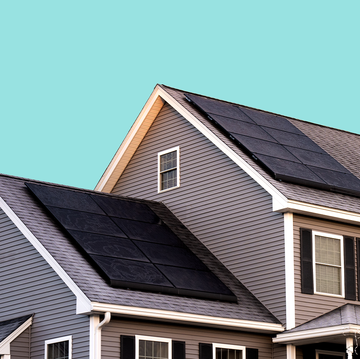
The efficiency of crystalline silicon-based solar photovoltaic panels drops as temperatures increase on a hot day. A green roof can therefore boost solar panel efficiency (and therefore the amount of power produced) by reducing the ambient temperature on a roof. In turn, solar panels can help protect the green roof from damage by gusting winds.
Pictured: Basel Main Exhibition Hall, Lake Basel, Switzerland, green roof by Architect Theo Hotz
green walls, vertical gardens, living walls, green roofs, vancouver aquariam
vancouver aquarium green wall
Walls are a plentiful, but often overlooked, opportunity for increasing green infrastructure. There are two main categories of green walls: green facades and living walls. Green facades are made up of climbing plants either growing directly on a wall or, more recently, on specially designed supporting structures. The plant shoot system grows up the side of the building while being rooted to the ground. In a living wall the modular panels are often made of stainless steel containers, geotextiles, irrigation systems, a growing medium and vegetation. Living walls share many of the benefits of green roofs and can also function as locations for urban agriculture or urban gardening.
Pictured: Vancouver Aquarium Green Wall
green roofs, green building, o'hare, airports
O’Hare Modernization Program (OMP) Building 607 – Barrett Company
Because green roofs do require a higher initial investment compared to conventional un-vegetated roofs, policy incentives are needed to further the industry's growth. In general, public benefits are greater than the private benefits, which is the main reason why supportive policies are needed to encourage private investment in green roof technology. Green roof policy is progressing in North America, although there is still significant room for development. A number of jurisdictions, including Chicago, New York City, Washington D.C., and Portland, Oregon have established a variety of policies in support of green roofs on public and private buildings. They range from requirements for green roofs on city-owned buildings and stormwater utility fee charges, to grants and floor-area bonuses. The city of Toronto recently passed a mandatory requirement for green roofs on all new buildings with a minimum gross floor area of 2,000 square meters.
Pictured: A green roof on building 607 at Chicago's O'Hare International Airport, designed by Barrett Company
forth wright, green roofs, sanitation, green building
green roof on sanitation district no. 1 fort wright kentucky
The success of a green roof project can be greatly aided by using a certified Green Roof Professional (GRP). In order to become a GRP, individuals are tested on a wide range of subject matter including design, installation, waterproofing, drainage, plants and growing media.
Pictured: Sanitation District No. 1 Fort Wright Kentucky
vancouver convention centre, green roofs, green building
green roofs at vancouver convention centre
From November 30 to December 3, 2010, Green Roofs for Healthy Cities will co-host the 8th annual CitiesAlive 2010 Green Roof and Wall Conference in Vancouver. This three-day event is the only major gathering in North America specifically focused on green roofs and walls, and how they relate to environmental, social and economic needs on a local, regional and global level. Urban food, energy savings, renewables, embodied energy, water-energy dynamics, biofuels, cost savings -- all these subjects will be on the agenda, as well as emphasis on new design practices, new projects and markets, new policies and research opportunities. It will be a combination of innovation, knowledge, profitability and cooperation, which is needed to build a more sustainable future.
Pictured: Vancouver Convention Centre, green roof by Flynn Canada Ltd
Steven Peck is the president and founder of Green Roofs for Healthy Cities, the North American industry association with the mission of increasing awareness of the economic, social and environmental benefits of green roofs and green walls. Damon van der Linde is the group's communication and research coordinator.
|
||||||||||||
![]() |
Enter your city or zip code to get your local temperature and air quality and find local green food and recycling resources near you.
|
![]() |
||||||||||
![]() |
||||||||||||
Connect with Us
:
: More Options

Comments| Add a comment