ADVERTISEMENT
GREEN HOMES

Can You Trust Your Local Drinking Water Quality Report?

A GAO study finds that states are failing to report about one of every four health-based water quality violations, and five of every six monitoring errors.

Share
Faucet dripping water
Photo: Istock

By Dan Shapley

States failed to report 26% of health-based drinking water quality violations and 84% of monitoring violations at the nation's drinking water supply plants, according to a study by the Government Accountability Office released last week.

While the GAO still calls the U.S. drinking water supply "among the safest in the world," the violations, found in a review of 2009 Environmental Protection Agency audits of 14 states, show that spikes in contamination levels were not reported in about one out of four instances. And five out of six monitoring violations, which investigators say could well mask additional unhealthy contamination, went unreported. The GAO study, ordered by Congress, was designed to help the EPA improve the quality of data it receives from the states, so that it can assess its success at meeting clean drinking water goals.

But what does it mean for consumers? The Daily Green wanted to know if the same reporting errors and omissions in state reports to the EPA were found in local drinking water quality reports. These reports, mailed to residents (or made available online), are called "consumer confidence reports" and they typically show residents how reliably safe their tap water is. But if the data being reported to regulators is inaccurate, does it also mean that the data reported to consumers is inaccurate?

That's what we asked David Trimble, the director of the GAO's Natural Resources and Environment team, which produced the new study. While the main point of the research was not to assess the veracity of those annual drinking quality reports, they are likely to suffer from the same problems, he said.

"The Consumer Confidence Reports are supposed to identify violations that have occurred," Trimble said. "If the state did not designate a certain circumstance (health-based or monitoring) as a violation, then it is unlikely that the (report) would notify the public of that violation. Also, if a 'missed' monitoring violation ... would have recorded the presence of a certain contaminant, then the utility could not report the presence of that contaminant to the consumers."

The EPA requires drinking water plants to report violations so that consumers aren't exposed to potentially harmful contamination, and so they can take precautions if contamination levels exceed health-based thresholds. The GAO investigation didn't assess the severity of the violations that went unreported, Trimble said, and there wasn't enough data to say, statistically, which types of contaminants were associated with the violations most frequently. But the health-based violations included "a variety of regulated contaminants, including total coliform, lead, disinfectant byproducts, nitrate, radionuclides, and others," he said.

The monitoring violations included "failure to conduct adequate monitoring, failure to report the results of monitoring to the state, failure to report the results on time, failure to meet the requirements for notifying the public about violations, and failure to meet the requirements to provide customers with a Consumer Confidence Report," Trimble said.

Public water systems provide treated tap water to most Americans (all but about 15 million who rely on private wells). The size of these water systems varies greatly, though, with — on one end of the spectrum — about 400 systems each serving populations of 100,000 or more and — on the other end of the spectrum — nearly 29,000 systems each serving populations of under 500. The GAO's report couldn't say whether the smaller water systems or the larger systems were more likely to have health- or monitoring-based violations.

The good news is that the GAO report comes with a set of recommendations for EPA to improve monitoring quality and reporting accuracy, and Trimble is confident that the EPA is committed to improving both.

"Water systems are required to report violations to the public in their Consumer Confidence Reports," Trimble said. "Therefore, if EPA and the states are able to improve their ability to identify violations when they occur, that should increase the likelihood that the Consumer Confidence Reports accurately reflect the operations at particular water systems."

In the meantime, consumers have few viable ways to verify the information they receive in annual drinking water quality reports. One can use the EPA's Safe Drinking Water Information System to "search for their system to learn whether or not violations have occurred" and to compare the data to information in their annual drinking quality reports, Trimble said, but the GAO's own research found the data in the system faulty.

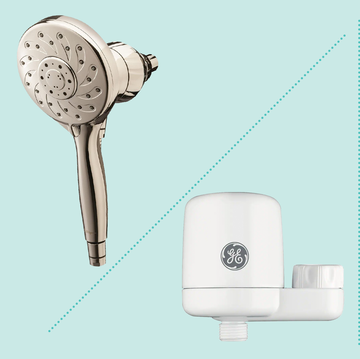
Trimble emphasized the overall safety of the U.S. water supply. For those interested in filtering their tap water, though, The Daily Green suggests checking out the Environmental Working Group's water filter buying guide. Depending on the contaminants you want to filter and the technology you want to pay for, options range from the effective and relatively affordable Culligan RC-EZ-Change 4 for under $80) to the comprehensive but expensive.


Share

Comments  |  Add a comment

Connect with The Daily Green
ADVERTISEMENT
Organic Gardening and Lawn Care
Save Energy at Home
Purify Indoor Air
Green Cleaning
Calculate Your Impact
Search for a location:
Enter your city or zip code to get your local temperature and air quality and find local green food and recycling resources near you.

ADVERTISEMENT
The Daily Green on Twitter
@the_daily_green
72,168 followers
Sign up for The Daily Green's free newsletter!