News flash! A mammogram isn't enough. You need a breast MRI too. Hold it! You don't even need a yearly mammogram. News flash! A high-fat diet definitely contributes to breast cancer. Hold it! High fat may not be that bad. It's red meat you have to worry about.
That's how headlines about breast cancer have been coming at us over the past year. Every study seems to contradict the last. Many of us wonder what — if anything — to believe. Actually, you can believe a lot. Behind the blare of headlines lies a deepening understanding of breast cancer. If the reports seem confusing, it's because experts are realizing more and more that recommendations about prevention, detection, and treatment need to be individualized. Some guidelines apply to every woman, but many don't. What's right for you? Here, the advice you need now.
Prevention: What Really Helps
You've probably heard the statistics: Over a lifetime, about one in eight women will develop invasive breast cancer. But seven out of eight will not.
Why the difference? Researchers can reel off a list of risk-raising culprits, but pinpointing exactly which ones forever shift the course of a life isn't yet possible. And even if it were, there are some risks that you can't eliminate — being female, for example, growing older, family history, flawed genes.
But you can still lower your odds, says Michael J. Thun, M.D., head of epidemiological research at the American Cancer Society. "The steps you have to take aren't always easy," he acknowledges — something that new research shows as well — but the payoff can be significant.
Move It (Faster! Harder!)
Swimming laps, doing aerobics, jogging — women who engage in strenuous activities like these at least five hours a week, and have done so for most of their adult lives, are 20 percent less likely to develop invasive breast cancer than are sedentary types who get no more than 30 minutes of exercise a week, reports the California Teachers Study, which has been tracking more than 110,000 women ages 20 to 79 since 1995. But the report yielded encouraging news for less-active women: Moderate workouts, like golf or walking, cut the odds of developing one form of breast cancer (estrogen-receptor-negative) for which there are fewer effective treatments.
Action plan: This study is the latest of many to show the benefits of vigorous exercise. Shoot for 45 to 60 minutes of heart-thumping workouts five days a week. Too hard? Start with brisk walks and work up.
Watch the Wine
Women who have more than two drinks a day increase their risk of invasive breast cancer by 43 percent, compared to those who don't drink at all, researchers from the large Women's Health Study recently announced. Lighter consumption is healthier, but risk still inched up by 9 percent among women who averaged just under one drink a day.
Action plan: There's no way to soft-pedal this: If you really want to minimize your risk of breast cancer, don't drink at all, advises Dr. Thun. Other experts say that if you do drink, make it an occasional treat.
Restock the Fridge
Two large-scale studies this year showed that food choices do affect breast cancer risk. The National Institutes of Health–AARP Diet and Health Study found that postmenopausal women whose daily diets average 40 percent fat — a very high percentage — raise their breast cancer risk 11 percent compared to women whose diets include a lean 20 percent fat. The other study, from England, found that postmenopausal women who eat about 4 or more ounces of red meat daily are 56 percent more likely to develop breast cancer than those who never eat any meat. (Red meat includes beef, pork, and lamb.) Processed meats like bacon, ham, and sausage have an even greater effect, raising risk to 64 percent.
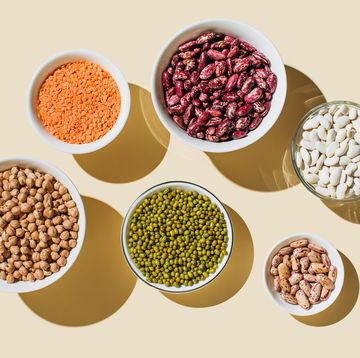
Action plan: Diet studies like these may not be the last word, because so many other factors can confuse the issue. In any case, dietary fat and meat have less impact on breast cancer risk than your weight gain in adulthood — experts agree that obesity actually doubles your odds. So paring off extra pounds makes more sense than fussing over red meat ratios. Make fat no more than 30 percent of your daily intake, choose healthier monounsaturated over saturated or trans fats, add whole grains to your diet, and enjoy meat occasionally and in small portions. Fish, beans, and tofu are protein-rich substitutes for meat. And eat colorful (red, yellow, green, orange) cancer-fighting fruits and veggies in supersize portions.
Early Detection: The Best Choices
The debate about mammograms has been particularly fiery over the past year, fueled by a report from the American College of Physicians questioning the wisdom of routine annual screening for all women in their 40s. Why the controversy? Don't mammograms detect breast tumors early? Yes, but it's not that simple. Especially in younger women, screening picks up many false positives, prompting callbacks for further tests — which can expose you to additional radiation and sometimes biopsies. What's more, no one can say for sure that finding microscopic cancers early saves lives. Some growths may never progress; some may be so aggressive that early detection won't make a difference.
Action plan If experts can't agree, how can an ordinary person decide what's best? First, no one disputes that all women 50 and over should be screened annually; mammograms cut breast cancer deaths (about 20 to 35 percent) for older women. As for those in their 40s, the American College of Physicians never said don't screen, but rather that the decision should be personalized. "A woman needs to talk to her doctor about her risks and the benefits of screening for her," says Vincenza Snow, M.D., director of Clinical Programs and Quality of Care at the American College of Physicians, who coauthored the group's guidelines.
Note that the American Cancer Society stands by its recommendation of annual mammograms for all women starting at 40. Other expert groups, including the National Cancer Institute (NCI), advise mammograms every one to two years for those in their 40s.
Keep in mind, too, that mammograms miss some cancers; depending on whether breast tissue is dense or fatty, the false-negative rate can run up to 15 or 20 percent, says Carol H. Lee, M.D., a professor of diagnostic radiology at Yale medical school and chair of the American College of Radiology Commission on Breast Imaging. That's why many experts believe you also need a clinical breast exam by a doctor every three years up to age 40 and annually thereafter.
Treatment: Lifesaving Decisions
In a recent Roper survey, the vast majority of women polled (86 percent) said that if they were diagnosed with breast cancer, they wouldn't know what questions to ask their doctors. Fortunately, you don't need to make snap decisions about treatment, nor should you. Quality of care varies tremendously from one center to another, and the science is changing rapidly, so it's essential to gather information and then make careful choices. "You want to get it treated right the first time," says Monica Morrow, M.D., chair of surgical oncology at Fox Chase Cancer Center in Philadelphia.
Action plan: Find a surgeon who specializes in breast cancer or devotes a significant chunk of his or her practice to it — at least one-fourth to one-third, says Dr. Morrow. You also want an experienced hospital: In a study of more than 11,000 women by researchers at the Medical College of Wisconsin, breast cancer patients who'd been operated on at hospitals that handled at least 40 such cases a year were 20 percent less likely to die from the disease by the five-year mark than those who'd been treated at the lowest-volume hospitals (which handled 19 or fewer breast cancer cases a year). Try to find a hospital that has a multidisciplinary team structure. Having breast specialists from radiology, surgery, pathology, medical oncology, and radiation oncology work together on your case leads to more effective treatment, a study from the University of Michigan Comprehensive Cancer Center found.
One way to reap all these advantages is to locate an NCI-designated cancer center (cancer.gov/cancercenters) or a hospital affiliated with a medical school. If you don't live near such a center, you might want to visit one for a second opinion that can guide your treatment back home, says Dr. Morrow. Centers like these are also most likely to be conducting clinical trials and to offer new treatments.